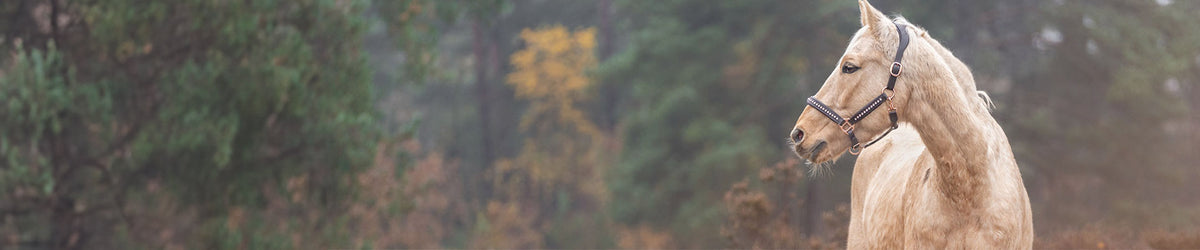
In winter, many horses eat hay instead of fresh grass. This can affect skin health, as essential nutrients like vitamins A, E, and C are missing. Horse owners should pay particular attention to the skin, as a deficiency can quickly manifest as skin problems.
Hay instead of grass, winter horse skin care: Symptoms
-
Dry or flaky skin
-
Dull coat
-
Hair loss in specific areas
-
Itching or increased scratching
-
Redness or minor irritations
-
Sensitive skin areas, especially on the withers and back
Early care can prevent skin problems and ensure the well-being of horses.
Causes: Hay instead of grass, winter horse skin care causes
The main cause of skin problems in winter is nutrient deficiency due to hay feeding, combined with environmental factors such as cold and humidity. The skin microbiome can also be affected by insufficient nutrients.
Common causes of winter horse skin problems when feeding hay instead of grass:
-
Nutrient deficiencies: Fewer vitamins and minerals in hay
-
Dry stable air: Deprives the skin of moisture
-
Coat change / transitional coat: Mechanical stress on the skin
-
Microbiome imbalance: Fewer nutrients weaken the skin flora
-
Damp or dirty bedding: Promotes skin irritations
-
Stress or reduced exercise: Affect skin regeneration
Balanced feeding, sufficient exercise, and targeted care significantly contribute to skin health.
Treatment with Doderm Hydro RepairGel: Hay instead of grass, winter horse skin care treatment
Targeted skin care is especially important in winter. Doderm Hydro RepairGel supports the skin microbiome, soothes irritated areas, and promotes skin regeneration. Antibodies from colostrum strengthen the skin's natural defenses.
Step-by-step guide for applying Doderm Hydro RepairGel:
- Expose the coat: Part the coat in the affected areas
- Clean the skin: Gently remove dirt, dust, and loose skin particles
- Apply a thin layer of gel: Apply evenly to the skin
- Repeat regularly: 1–2 times daily as needed
- Continue consistently: Apply until skin and coat are regenerated
Benefits of Doderm Hydro RepairGel for treating winter horse skin problems when feeding hay instead of grass:
-
Antibodies from colostrum strengthen the skin barrier
-
Supports the skin microbiome
-
Soothes irritated and dry skin
-
Natural, gentle mode of action without aggressive chemicals
-
Simple and targeted application
Tips & Prevention: Avoiding horse skin problems in winter
In addition to using Doderm Hydro RepairGel, the following measures can prevent skin problems in winter:
-
Balanced feeding: Supplement minerals and vitamins specifically
-
Regular coat care: Brush, remove dirt, and check the skin
-
Clean and dry bedding: Keep stables, blankets, and stalls clean
-
Humidity in the air: Humidifiers or regular outdoor exercise
-
Promote exercise: Regular turnout supports skin regeneration
-
Reduce stress: Calm environment and familiar routines
Tip:
Occasionally feed your horse fresh winter vegetables such as carrots or parsnips as a supplement to hay. These provide valuable vitamins and antioxidants that strengthen the skin microbiome, support skin hydration, and facilitate coat changes – a natural support for healthy winter skin.
Conclusion: Hay instead of grass, natural help for winter horse skin care
In winter, feeding hay instead of grass can lead to nutrient deficiencies and skin problems. With Doderm Hydro RepairGel, the skin can be specifically supported, the microbiome strengthened, and dry, sensitive skin regenerated.

0 comments