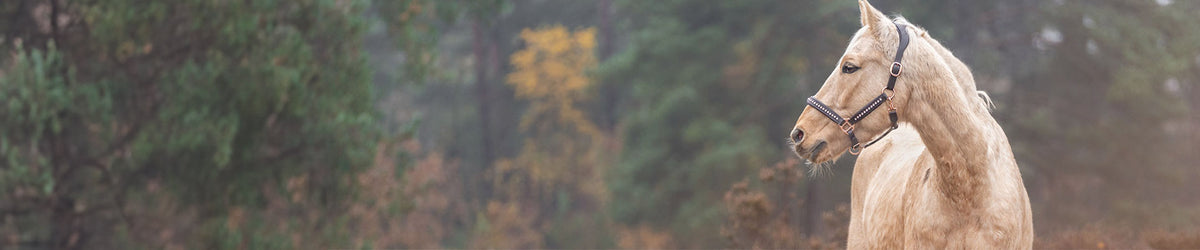
In autumn and winter, many horses suffer from dandruff, which not only impairs the coat's appearance but can also indicate skin problems or dryness. Dandruff is often underestimated, but it can worsen if left untreated.
Typical symptoms of dandruff in horses:
-
White or grey flakes in the coat
-
Itching and increased rubbing
-
Dry, rough skin patches
-
Thick or dull winter coat
-
Redness or mild irritation in particularly sensitive areas
Early detection is crucial to strengthen the skin barrier and maintain the horse's well-being.
Causes: Dandruff in Horses in Autumn and Winter
Dandruff doesn't appear by chance. Especially in the colder months, several factors contribute to its development:
-
Dry stable air – heating or insufficiently ventilated stables dry out the skin
-
Dense winter coats – undercoat retains moisture, preventing the skin from "breathing"
-
Lack of skin care – infrequent brushing or insufficient cleaning promotes dandruff
-
Microbiome imbalance – a disturbed skin flora encourages irritation and dandruff
-
Nutritional deficiencies – too few essential fatty acids or vitamins weaken skin and coat
-
External moisture – rain, wet hay, or muddy ground can exacerbate skin irritations
Understanding the causes allows for targeted prevention and care measures.
Care with Doderm Repair Gel: Dandruff in Horses
Doderm Repair Gel supports your horse's skin naturally, reduces dandruff, and promotes skin regeneration. Antibodies from colostrum strengthen local defenses and stabilize the skin microbiome.
Step-by-step application:
- Expose the coat – Gently brush the coat to remove loose hair and flakes.
- Clean the skin – Gentle cleaning with lukewarm water or a mild skin cleanser to loosen dirt and excess flakes.
- Apply a thin layer of gel – Apply Doderm Repair Gel evenly to the affected areas.
- Gently massage in – So that the active ingredients penetrate deeply and soothe the skin.
- Repeat regularly – Apply 1–2 times daily, especially for severe dandruff.
Benefits of Doderm Repair Gel:
-
Antibodies from colostrum strengthen the skin barrier
-
Supports a healthy skin microbiome
-
Soothes dry and irritated skin
-
Natural ingredients without harsh chemicals
-
Easy to use for everyday care
With Doderm, horse owners can reduce dandruff and optimize skin care in autumn/winter.
Try Doderm Repair Gel for horses
Tips & Prevention: Avoiding Dandruff in Horses
To reduce dandruff and keep your horse's skin healthy, consider the following measures:
-
Regular coat care – Brushing removes loose hair and distributes skin oils
-
Stable hygiene – Clean bedding and regularly ventilated stables prevent moisture buildup
-
Moisturizing care – Apply Doderm Repair Gel specifically to dry areas
-
Adjust diet – Sufficient omega-3 fatty acids and vitamins promote skin health
-
Veterinary check-ups – For persistent dandruff or skin problems, rule out allergies and skin diseases
Extra tip: When brushing, pay attention to sensitive skin areas such as the back, fetlocks, and mane to avoid skin irritations.
Conclusion: Natural Help for Dandruff in Horses
Dandruff in horses during autumn and winter is a common problem, but it can be effectively treated with targeted care and natural products like Doderm Repair Gel. The gel soothes dry skin, stabilizes the microbiome, and supports skin regeneration naturally.

0 comments